A First Neighbourhood Gathering with Room for Quiet Company
A first neighbourhood gathering can welcome conversation and quiet company alike, with a simple format that helps newcomers choose how much to join in.
How do you host a first neighbourhood gathering without making conversation feel like a test? A first neighbourhood gathering can offer several ways to be present: talk, listen, help with a small task, or simply share the room. The host’s job is to make those options visible before anyone arrives.
For a small meet-up in a library room, courtyard, or community center, choose a format that matches the place and the people you hope to welcome. A loose social hour, a shared activity, and a gentle host-led welcome can all work. They suit different needs, though, and each asks for a different kind of preparation.
Choose a social hour
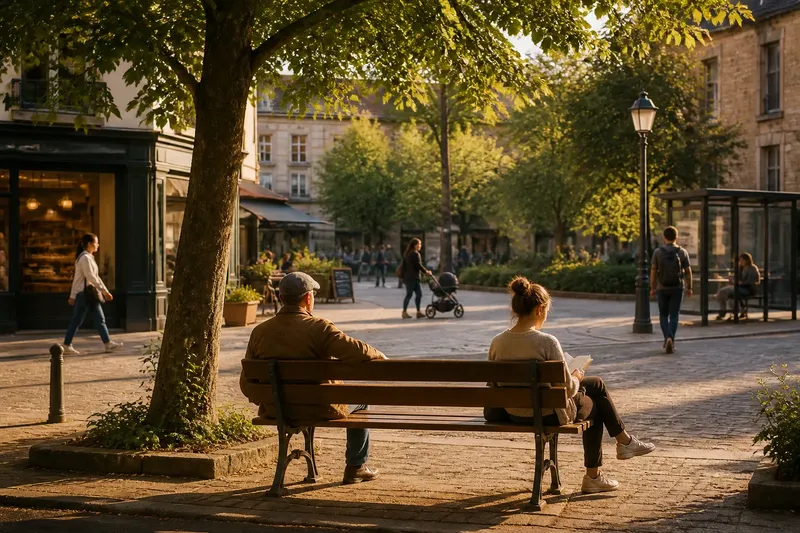
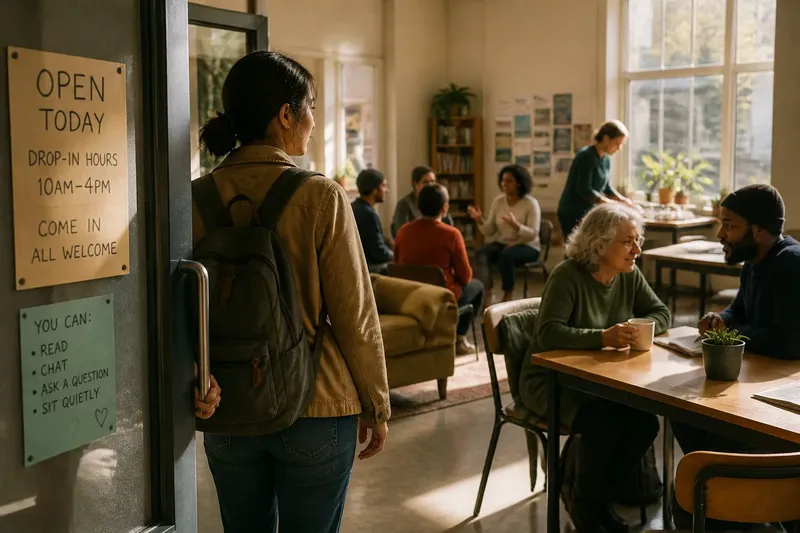
A simple social hour gives people room to arrive at their own pace. Put chairs in small clusters rather than a single circle, and leave a few seats at the edge for anyone who prefers to observe. A clear sign at the entrance can say what the gathering is and that people may come and go.
This option suits neighbors who want an informal introduction without a scheduled program. It is also easy to adapt if attendance is uncertain. The trade-off is that open conversation can leave a newcomer unsure how to enter, especially if several people already know one another.
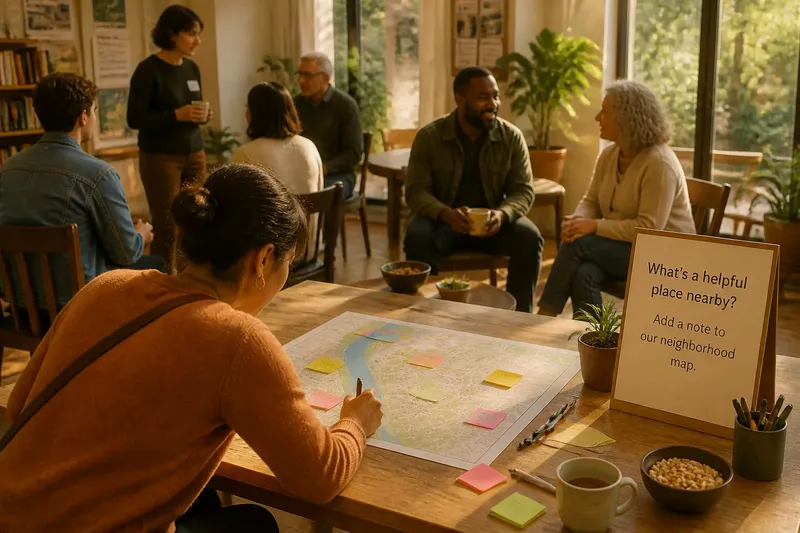
Give the room a modest anchor. Set out a neighborhood map, a bowl of snacks, or a sheet where people can mark a nearby place they enjoy. These objects give people something to notice or discuss, but they should not become an assignment. Avoid asking everyone to introduce themselves in turn.
Keep the first welcome brief: name the host, point out refreshments and the quiet seats, and explain that talking is optional. Then let people choose where to settle.
Offer a shared activity
A light activity can make company easier because attention rests on something besides small talk. Neighbors might add suggestions to a shared map of useful local spots, sort donated books for a little free library, or make simple name cards with a favorite nearby walk. Choose an activity that can be joined late and left unfinished.
This approach suits people who prefer a reason to stand or sit beside others rather than face them directly. It can also help people who arrive alone. Keep materials familiar and easy to use, such as sticky notes, thick markers, paper, or a large printed map.
The activity should not demand personal disclosure or specialist knowledge. A map can invite a place name without asking why someone goes there. Make it clear that people may look on, contribute one small thing, or skip the activity entirely.
Imagine a host setting out a neighborhood map and sticky notes, with a sign inviting people to mark a helpful public place. A newcomer adds the branch library, then sits nearby without speaking; others can see the contribution and continue the conversation around it. The visible result is participation that does not depend on a spoken introduction.
Use a gentle welcome
A host-led welcome can give a gathering a clearer shape while keeping the tone relaxed. Rather than asking each person to speak, the host can share a short note about why the group has met, name the available ways to participate, and mention where to find water, restrooms, or a quieter seat.
This option suits a group with several newcomers, or a place where visitors may not know whether they are allowed to join. It can also help when the gathering has a practical purpose, such as exchanging information about a local service. Keep the welcome short enough that it does not turn a casual meet-up into a meeting.
Offer a prompt only as an invitation. For instance, people can name a place they would like to know better, or they can pass. A host can model passing by saying that listening is also a way to take part. Do not go around the room or call on people who have not volunteered.
Plan for different arrivals
The first few minutes often shape whether someone feels comfortable staying. Ask one host to greet arrivals near the door, while another person—if available—keeps an eye on the room. A greeter can explain the layout, point out an open seat, and avoid pressing for a name or conversation.
Use a short invitation in advance that answers practical questions: where the entrance is, whether the room is accessible, whether refreshments are available, and whether people can arrive late or leave early. If the venue has particular access rules or limits, check with the venue contact and state the relevant details clearly.
Think about sound and seating as part of the welcome. A speaker or music can make it harder to follow conversation, while one large circle can make quiet participation feel conspicuous. Leave a path between chairs and provide a place where someone can sit without being in the center of activity.
Which format fits your gathering?
Is a social hour right for a first meet-up?
Choose a social hour if the goal is simply to let neighbors meet and attendance may change as people arrive. Add a visible conversation prompt or shared map so newcomers have an easy point of entry without a required round of introductions.
What activity works for people who prefer listening?
Choose an activity with more than one level of involvement, such as looking at a neighborhood map, adding a note, or helping arrange materials. A person should be able to take part quietly and stop whenever they wish.
When should a host lead the welcome?
A brief host-led welcome helps when visitors may be unsure about the purpose or practical arrangements. It is also useful when there is a shared task, provided the host explains that speaking and contributing are optional.
How do you choose among the formats?
Start with the purpose and the room. For casual introductions, use a social hour; for a shared point of focus, set out a low-pressure activity; for clarity or orientation, add a short welcome. You can combine a brief welcome with either of the other options, but avoid stacking so many activities that guests feel they must keep up.
Make the invitation plain
Use everyday language in a flyer, email, or message to a neighborhood group. Say who is welcome, what will happen, and what people may do if they do not want to talk. “Drop in for tea and a neighborhood map; conversation is optional” tells people more than “Come meet your neighbors.”
Choose one person to handle practical questions before the gathering, and make the contact method easy to spot. If the location is a shared room, include its entrance or floor so visitors do not have to guess where to go. A clear invitation can reduce uncertainty before anyone reaches the door.
Leave room for quiet company
As the gathering ends, thank people for coming without asking them to report what they thought in front of the group. Let guests leave naturally, and offer a simple way to hear about another meet-up if they want one. Quiet attendance is not a failure to participate; for some neighbors, being present is the first comfortable step.
For a first neighbourhood gathering, make the format easy to understand and participation easy to vary. A few open seats, a short welcome, and an activity that can be watched as well as joined can help people share a place without having to perform sociability.