Why a Shared Bench Changes the Feel of a Small Square
A shared bench can make a small square feel more welcoming by giving people a place to pause, watch the street, and meet without pressure to talk.
Why does a shared bench change the feel of a small square? A shared bench gives people a reason to stop without needing an appointment, a purchase, or a conversation. That small change can make a pass-through space feel like somewhere people are allowed to spend time, while leaving each visitor free to be quiet.
The bench does not create community by itself. Its effect comes from how it fits into the square: where it faces, what surrounds it, and whether people can use it without blocking anyone else. Looking closely at those details helps explain why one seat can alter the ordinary rhythm of a public place.
A reason to pause
A square with no seating often serves a clear purpose: people cross it to reach a shop, a bus stop, or another street. Some may linger at its edge, but stopping can feel awkward when there is nowhere to rest. A bench makes pausing legible. Someone sitting down does not have to explain why they are there.
This matters because public life includes more than conversation. A resident may wait for a friend, catch their breath, read a message, watch children play, or simply look at the passing street. These are ordinary uses of public space, not failed attempts to socialize.
A shared bench also makes time visible. A person walking through may notice someone already seated and understand that staying for a while is acceptable. The bench offers permission through its presence, rather than through a sign or an organized event.
Informal encounters
When people pause within sight of one another, brief encounters become easier. They might exchange a nod, ask whether a seat is free, or recognize a familiar face on another visit. The interaction can remain small. Its value lies partly in the fact that it does not need to become a friendship or a planned gathering.
The bench can also hold different kinds of attention at once. One person may be absorbed in a book while another watches the street. Someone arriving with a stroller may ask for room at one end. These people share a place without sharing a purpose.
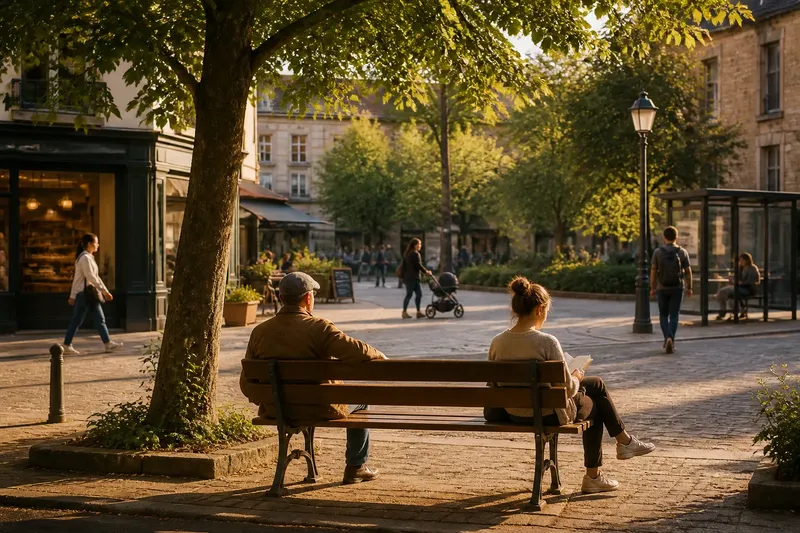
Say a square has a narrow path between a bakery and a bus stop. Imagine a bench placed beside a tree, outside the path, with its ends open for people to sit separately. A person waiting for a ride could rest there, while a passerby might greet a neighbor and continue walking. The expected result is not a conversation between every visitor; it is a more usable pause that leaves room for an occasional exchange.
Choice in the layout
Position shapes whether a bench feels inviting or exposed. A seat facing directly into a busy route may make people feel watched or in the way. One set slightly beside the route can let seated visitors observe the square while leaving walkers a clear line through it.
Orientation changes the social invitation. Seats facing one another encourage conversation, but can feel demanding to someone who wants to sit alone. A bench facing the street supports watching and quiet company, though neighbors may need to turn toward each other to talk. A curved or angled arrangement can offer both possibilities if the square has room.
Distance from nearby activity matters too. A bench close enough to a play area lets a caregiver keep watch; one close to a café may suit people waiting for someone. But a seat placed beside a doorway, loading area, or narrow curb can make both sitting and circulation uncomfortable. The best location is not simply the most central one. It is the location where sitting does not interrupt another ordinary use.
Shared without pressure
A shared bench is not necessarily one long seat where strangers must sit shoulder to shoulder. Armrests, a gap, or separate sections can give visitors a little control over distance. Such divisions may make a bench less flexible for a large group, but more comfortable for people who prefer a quiet interval among others.
Choice also depends on what the bench offers nearby. A person who wants to stay alone may prefer a view of trees or the street rather than a face-to-face arrangement. Someone arriving with a companion may want enough space to sit side by side. A square can serve both needs when its seating does not prescribe a single way to use it.
That is why a shared bench should not be treated as a social program. It is a modest piece of public furniture, not an invitation that visitors are obliged to accept. A person can occupy the same square as others and still keep their attention to themselves.
Comfort and access
People are more likely to pause when a seat feels usable for the visit they have in mind. A backrest can help someone settle in; a seat without one may suit a brief stop. Shade can make a sunny corner more comfortable, while an open position may be preferable where the square feels dark or enclosed. These details affect who can use the bench and for how long.
Access includes the route to the seat, not only the seat itself. A clear, firm approach helps people using mobility devices, pushing strollers, or carrying bags reach it without negotiating clutter. Nearby space for a wheelchair companion or a parked stroller can make the bench more useful to a group with different needs.
Materials and upkeep shape how a place is experienced from day to day. A surface that collects litter or stays damp may discourage sitting, while a maintained bench signals that the square is cared for. The relevant choice depends on local conditions and the guidance of the manufacturer or responsible city department; residents should not assume every material suits every site.
Reading the square?
Does a bench make strangers talk?
Not necessarily. It makes it easier to share space and may create openings for a greeting, but visitors can remain quiet or focused on their own reasons for stopping.
Where should a bench face?
Consider what seated visitors should be able to see and what nearby activity they need to avoid blocking. A view toward trees or street life may support quiet observation, while a face-to-face arrangement can better suit conversation.
Can one bench serve different visitors?
It can if people have some choice about distance, approach, and what they face. A bench with room around it may work for a person alone, a caregiver, or two neighbors arriving together.
What if the square is too small?
A seat should not narrow a walking route or occupy space needed for another use. If a bench cannot fit comfortably, a single seat at the edge may be more considerate than placing a larger one in the center.
Signs of a useful pause
It is possible to judge a bench by ordinary observations rather than by assuming it should produce a crowd. Notice whether people can approach without stepping into the main flow, whether seated visitors have a comfortable view, and whether someone can sit apart from others without seeming excluded.
Also watch how the seat serves different moments. A bench may be occupied at one time and empty at another, yet still be useful to someone who needs a place to wait. Occasional use is not evidence that the square has failed. The point is to make stopping available, not to keep every seat occupied.
For a small square, the most useful question is often not “How do we get people to interact?” but “Can people choose to stay here on their own terms?” A shared bench can answer that question with a simple, visible invitation: there is room to pause, and no requirement to do more.
When considering a shared bench for a small square, look first at the path people already take through it, then find a position that leaves that path clear. A seat that respects both movement and stillness gives neighbors a place to meet by chance—and gives everyone else a place to rest without explanation.