Drop-In Hours or Booked Sessions: Two Ways to Share a Community Room
Drop-in hours or booked sessions shape who can use a community room and when. Compare the formats to choose a rhythm that fits local routines.
At a community room, one neighbor may arrive straight from the bus while another needs to plan around a shift or a child’s pickup. Drop-in hours or booked sessions decide whether both can take part, and how predictable the room feels once they get there. The choice is not simply between casual and organized; it shapes the daily rhythm of a shared place.
Arrival sets the tone
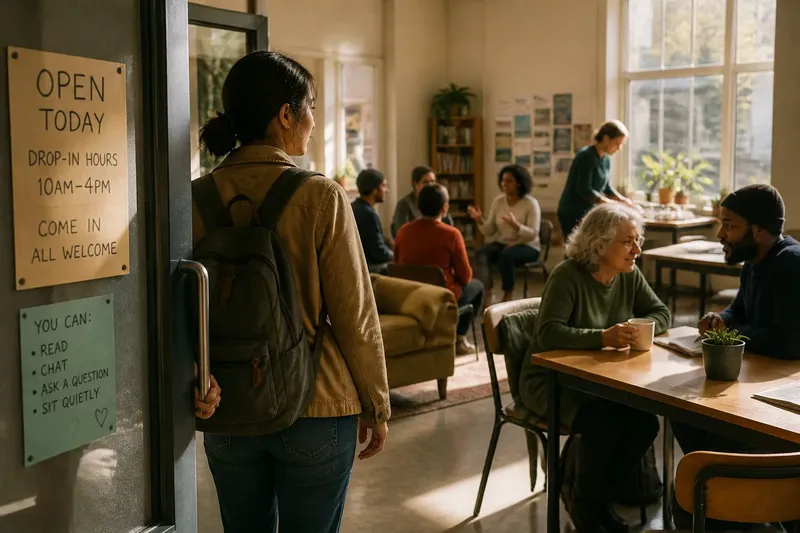
During drop-in hours, people can come and go within a stated window without reserving a place. A posted open-door period might welcome anyone who wants to read, chat, bring a question to a local volunteer, or sit quietly. The invitation is broad, but the actual activity may vary from one visit to the next.
Booked sessions give each gathering a defined start and purpose. A neighborhood repair table, language exchange, or residents’ discussion can begin with its materials and participants ready. People know what they are joining, but someone who misses the booking window or arrives late may feel shut out.
Think about the first minute at the door. Can a newcomer understand whether the room is open, what is happening, and whether they may join without interrupting? A clear welcome matters in either format.
Post the arrival rule where people approach the room, not only on a page they may never see.
Drop-in hours and predictability
Open arrival is flexible for residents whose days do not follow a neat calendar. A person finishing a late shift may be able to stop by if the room remains open, even if they cannot promise to attend every week. This can make participation possible for people with changing work, care, or travel routines.
That flexibility has a tradeoff: visitors cannot always know who else will be there or what kind of welcome awaits them. If the room is sometimes quiet and sometimes crowded, a newcomer may hesitate. A recurring host and a simple description of the usual atmosphere can reduce that uncertainty without turning the gathering into a formal appointment.
Imagine a tenant who can only visit after a bus connection and never knows the exact arrival time. If a community room offers an open period and leaves a clear sign explaining that visitors may enter quietly, the tenant can come when possible and see whether the activity suits them. The observable result is an easier decision at the threshold, not a promise that the room will always be busy.
Keep drop-in hours steady enough to become part of the neighborhood’s routine, and explain plainly when they change.
Booked sessions and shared time
Scheduling is useful when an activity depends on preparation, a facilitator, or a limited number of seats. A craft session may need tables cleared and supplies ready; a residents’ meeting may need an agenda so people can plan what to raise. Reserving a place helps organizers estimate attendance and gives participants a defined commitment.
Yet a booking system can make a shared room feel like a private club, even when that is not the intent. Requiring an account, a long form, or early registration adds friction. So does filling every seat with confirmed participants if a few residents might decide to come after seeing the activity underway.
Use the lightest reservation method that fits the gathering. A sign-up sheet at the library desk, a phone number, or a simple online form may work better than a complicated platform. Say whether late arrivals can join and whether a person may attend without registering if space remains.
For an activity with a firm capacity or a specific start, make the booking condition visible before someone makes the trip.
Matching format to purpose
Start with what the gathering asks of its participants. An informal tea table, casual conversation, or quiet place to pause can often tolerate people arriving at different times. A workshop that relies on everyone hearing the same introduction may be easier to run as a booked session.
Some activities benefit from a mixed arrangement. A room might reserve the first part of an evening for a scheduled discussion, then remain open for informal conversation. Another option is to make a drop-in period the default while setting aside a few reservable places for an activity that needs preparation. The important point is to state which parts are open and which require a booking.
Room layout can support either approach. For open hours, a small table near the entrance can give newcomers a low-pressure place to pause before deciding whether to join the larger group. For a scheduled session, chairs arranged in a clear circle can help participants see that the event has begun. A separate quiet corner may help the room serve people who want company without constant conversation.
Choose the format from the activity’s demands, then make the room’s welcome fit the people likely to arrive.
Details that prevent confusion
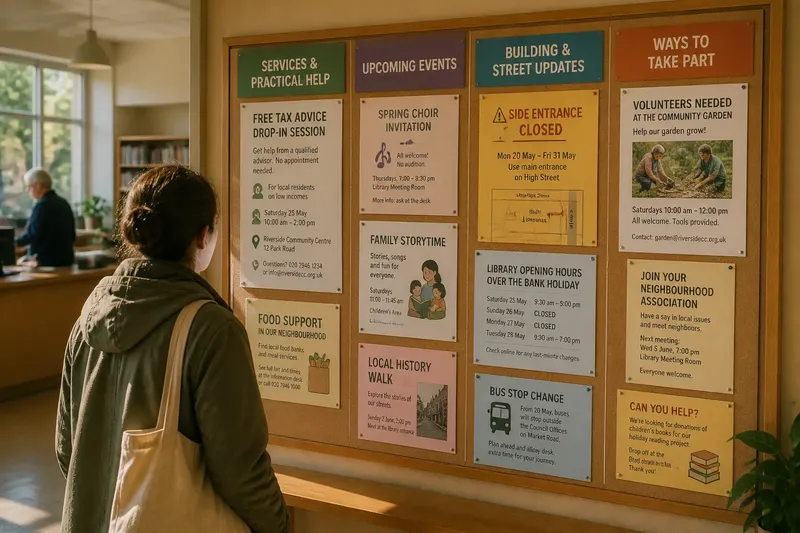
Short, specific information is more useful than a general invitation. Include the day, opening and closing times, the activity, whether people can arrive late, and any booking requirement. If the room is in a building with more than one entrance, identify the door and any access instructions residents need before leaving home.
Use the same wording on the door, printed handouts, and any community calendar. If a session is canceled or the room is unavailable, update the places residents are most likely to check. A mismatch—such as a door sign saying “drop in” while an online listing says “registration required”—can make both systems seem unreliable.
Keep the message welcoming but direct. “Come by during open hours; no sign-up needed” answers a different question from “Reserve a seat for the workshop.” Avoid implying that every visitor must join the main activity; someone may want to listen first or ask a host a question.
Where access, capacity, or building rules affect the arrangement, check the room’s posted terms and the responsible organization’s instructions.
Questions residents ask?
Can a drop-in gathering have a planned activity?
Yes. A host can set out a puzzle, a map for marking local concerns, or a conversation prompt while letting people arrive at their own pace. Make clear that joining the activity is optional if the room is also intended for quiet use.
Should every attendee reserve a place?
Not necessarily. A reservation is most useful when the room, materials, or facilitator cannot accommodate an uncertain crowd. If space allows, organizers can reserve places while also welcoming unregistered visitors, as long as the rule is stated clearly.
How can a newcomer tell whether they may join late?
Say so in the event description and on the door. For a session where late entry would interrupt, explain the start time and offer a way to contact the host about another visit.
What if attendance changes from week to week?
Choose a format that can absorb variation, or describe the limits honestly. A host might keep a drop-in period open while moving a small, preparation-heavy activity to a separate booked session.
A steady local rhythm
Drop-in hours or booked sessions work best when residents can tell what kind of visit each one offers. Open hours favor flexibility and the chance to arrive without planning; reservations favor a known start, prepared materials, and a clearer sense of who is coming. Neither format automatically creates a welcoming room.
For a neighborhood considering a change, try describing one ordinary visit from the resident’s point of view: when they would arrive, what they would see at the door, and whether they could join without prior contact. If that path is clear, the room’s schedule can become a dependable part of local life rather than another detail residents must guess.